Symptom: your AI workloads face strict data-location or isolation rules. Fastest route: assess AWS AI Factories if you need dedicated AWS AI infrastructure in your own data center; assess public cloud AI compute first if you need flexible experiments and a faster route to shared cloud resources.
This decision is for enterprise architects working through data-residency boundaries, platform teams planning AI operations, and technical leaders preparing a security or procurement review. The right choice depends on where workloads and data must run, how steady demand will be, and who will operate each layer—not on whether an option is labelled “dedicated.”
How do AWS AI Factories differ from public cloud AI compute?
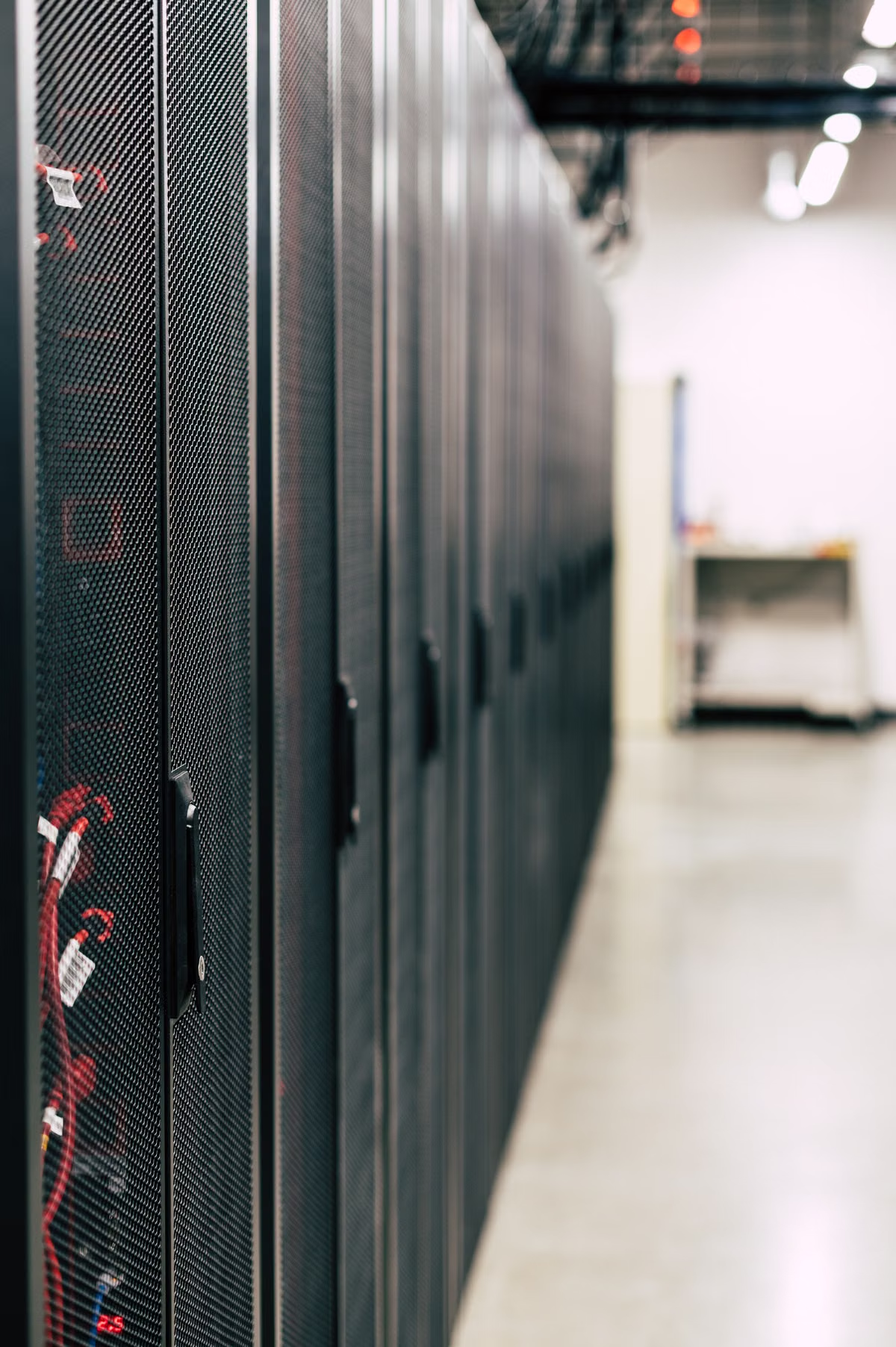
AWS describes AI Factories as dedicated AWS AI infrastructure deployed in customers’ data centers and integrated with AWS services. That is different from consuming AI compute in a public cloud environment: with public cloud, you use services and capacity delivered through AWS’s cloud infrastructure rather than planning around a dedicated installation at your own facility. Check the AWS AI Factories announcement and official AI Factories FAQs for the current public description.
The key distinction is the deployment boundary, not a guarantee that every service, control, or operating duty changes in the same way. AWS’s public material describes the deployment model and integration at a high level. Your procurement documents and service agreements must establish what is actually included for your organization: available services, prerequisites, capacity, support, responsibilities, and limits.
| Decision dimension | AWS AI Factories | Public cloud AI compute |
|---|---|---|
| Deployment location | Dedicated AWS AI infrastructure is described as being deployed in a customer data center. Confirm the specific site and deployment conditions with AWS. | Workloads use public cloud infrastructure. Confirm the selected service’s location and configuration. |
| Data boundary | Can be relevant when your requirements call for infrastructure in your own facility. It does not, by itself, establish that a workload meets your legal or internal policy requirements. | May meet some residency and access requirements, depending on service, region, configuration, and organizational policy. |
| Starting point | Requires review of the dedicated deployment, facility readiness, scope, and operating responsibilities. | Lets teams evaluate available cloud services without first planning an on-premises dedicated deployment. |
| Service selection | Confirm the specific AWS services and features available within the proposed environment. Do not infer full parity with public cloud. | Compare service options directly. AWS’s Bedrock and SageMaker decision guide helps distinguish those service paths. |
| Operating model | Requires a clear division of duties between AWS and your organization for infrastructure, network, security, and incident handling. | Shared responsibility still applies. AWS’s shared responsibility guidance describes the general model. |
| Capacity and growth | Assess dedicated resource planning, expansion conditions, and dependencies with AWS before committing. | Assess the chosen services’ availability, capacity controls, and limits. Verify the details for each service. |
AWS AI Factories should therefore be treated as a distinct deployment option, not as a promise that public cloud services can be replicated without change inside any customer facility. The official FAQ and product information are the starting evidence; contract terms and current service documentation determine the scope you can rely on.
Choose the deployment scenario before choosing the label
When does a business need AI infrastructure in its own data center?
Consider a dedicated deployment when a specific organizational requirement makes the data-center boundary material. That could be a policy governing where sensitive data is processed, a constrained network boundary, or an isolation requirement that your security team cannot meet with the public cloud design currently under review.
“Data must remain in our facility” needs a precise definition before it can drive a purchase. Ask whether the rule applies to source data at rest, data in use during inference or training, logs, backups, model artifacts, administrative access, or support workflows. Each answer can change the technical design and the evidence your reviewers require.
Use this scenario when your organization can name the control objective and identify who owns it. A data-center deployment may fit the stated boundary, but do not assume that the location alone satisfies a law, contract, or internal control. AWS’s data-residency guidance can help frame location-related questions. AWS also describes options related to AI sovereignty in its AI sovereignty overview. Neither replaces your legal review or a check of the exact service and contract.
Before treating residency as a pass/fail requirement, have security, legal, and platform teams agree on the evidence they need:
- Which data classes may enter the workload, and which are prohibited?
- Where must data, logs, checkpoints, backups, and model artifacts be stored or processed?
- Which administrators and support personnel may access the environment, and under what controls?
- What network routes, identity controls, and audit records must exist?
- Which AWS services and features are in scope, and are any required capabilities excluded?
- Which internal policy, contract clause, or legal interpretation is the requirement based on?
AWS documentation can explain the published service model. Your organization’s policy defines the requirement. Your review team must connect the two before you call the design compliant.
Use public cloud first when the work is still exploratory
If a team is still testing model approaches, application designs, or user demand, public cloud AI compute is often the more straightforward route to evaluate first. You can assess available services, access controls, and workload behavior before committing to a dedicated infrastructure project. The choice is especially relevant when the team’s resource needs change with experiments or when the platform group has not yet established a stable operating model.
The trade-off is that “quick to test” does not mean “no governance work.” You still need to review data handling, identity, service limits, network access, logging, and the service’s availability in the locations you require. A prototype that uses non-sensitive test data may be a useful technical evaluation, but it does not prove that production workloads satisfy a residency or isolation policy.
The AWS decision guide for Amazon Bedrock and Amazon SageMaker is one useful input when you are choosing an AI service path. It does not settle the broader deployment question. First decide which data and workload boundary you need; then compare the services available within that boundary.
Assess dedicated infrastructure for steady, governed workloads
A dedicated environment deserves closer review when demand is stable enough to justify resource planning, the data-center boundary is a firm requirement, and the organization can support the operational model. This is not simply a larger version of an experiment. You need to plan for capacity, connectivity, storage, identity, patching or maintenance responsibilities, and service continuity.
Do not assume that a dedicated deployment can expand at the same pace or in the same way as public cloud capacity. Ask AWS to specify how resource growth works, what dependencies constrain it, and what happens when the workload exceeds the planned envelope. The public product description establishes a deployment concept; it does not answer every customer’s capacity or failure-recovery question.
Clarify the operational boundary in writing. AWS’s general shared responsibility model explains why using an AWS service does not remove every customer security duty. For the proposed AI Factories environment, obtain a workload-specific responsibility map that covers infrastructure, network, storage, identity, model services, monitoring, maintenance, and incident response.
Compare the options against your actual operating constraints
The table below is a decision aid, not a compliance conclusion or a statement of AWS service availability. Use it to identify what your internal review must verify.
| Your situation | Start by evaluating | Evidence to collect before approval |
|---|---|---|
| Residency or isolation is mandatory and tied to a specific facility boundary | AWS AI Factories, alongside any other design that can meet the stated boundary | Data-flow diagram, service and deployment scope, access model, contractual terms, and written security and legal review |
| Teams are exploring workloads and requirements may change | Public cloud AI compute | Approved test-data rules, service configuration, network and identity controls, and a path to production review |
| Workload demand is stable and dedicated resource planning is viable | AWS AI Factories and a public cloud design as a baseline | Capacity assumptions, expansion conditions, network and storage plan, support duties, and recovery responsibilities |
| Service scope or facility readiness is unclear | Do not commit to either option yet; run a requirements and feasibility review | Confirmed prerequisites, service availability, facility responsibilities, delivery scope, and procurement conditions |
| The project has no clear data owner or operating owner | Pause the deployment decision | Named owners for data classification, security, platform operations, procurement, and incident response |
This comparison avoids a common procurement mistake: comparing a dedicated deployment with an abstract idea of “the cloud.” Compare the proposed environment with a named public cloud design, using the same workload, data classification, access policy, and service needs. Otherwise, you may compare a concrete proposal with an unverified assumption.
Turn the decision into a review plan
First, define the workload boundary
Write down what the system will do: training, inference, retrieval, evaluation, or a mix. Identify data inputs, generated outputs, logs, model artifacts, and integrations. Separate production data from test data. If teams cannot agree on which information may enter the workload, pause solution selection and resolve classification first.
This step determines whether data residency is a hard constraint or a preference. It also gives security reviewers a concrete data-flow map instead of a broad claim that “the data must stay private.”
Next, record the policy and the proof required
Ask legal and security teams to state the control in operational terms. “Keep data in the country” could refer to storage location, processing location, administrative access, support access, or a combination. Record which evidence will close the review: service documentation, contract language, architecture diagrams, access logs, or a formal internal approval.
AWS offers governance guidance through its AWS governance resources. Use it to organize governance questions, not as a substitute for your organization’s own policy interpretation.
Then, compare service scope and dependencies
List the AI services and adjacent capabilities the workload needs. Include identity, networking, storage, observability, secrets management, and deployment tooling. For each item, ask whether it is available in the proposed environment, whether it has configuration limits, and who supports it.
Do not treat a product family name as proof that every service or feature is included. Ask AWS to confirm the exact scope in current documentation and the proposed commercial terms. Record gaps explicitly; an unsupported dependency can change the decision even if the deployment location looks suitable.
Assign an owner to each operational layer
Before procurement approval, map duties to named teams. Cover facility access, network changes, identity administration, vulnerability response, monitoring, backup and restore, service maintenance, and incident escalation. If a task has no owner, it is an unplanned operating cost and a likely source of delay during an incident.
AWS’s published shared responsibility material provides a general framework. Your architecture review should extend it into a project-specific matrix that reflects the offered deployment and your own control environment.
Test the decision against growth and failure
Ask how the design behaves when demand changes, storage grows, a network path is unavailable, a model service is degraded, or the workload must be recovered. Confirm which team detects each condition, who can act, and what recovery evidence is available. Avoid assigning a recovery commitment until the responsible parties have confirmed it.
For dedicated infrastructure, ask what changes require advance planning and what expansion constraints apply. For public cloud, verify the relevant service limits and configuration choices. In both cases, write down assumptions so that procurement, security, and platform teams review the same design.
Finish with a documented go/no-go
Take the data-flow diagram, policy interpretation, service-scope confirmation, responsibility matrix, and growth assumptions to the review meeting. Choose AWS AI Factories only if the dedicated data-center boundary addresses a defined need and the organization accepts the operating duties and confirmed constraints. Choose public cloud AI compute when the design meets policy and faster experimentation or changing demand outweighs the need for dedicated infrastructure.
If neither case is supported by evidence, the decision is not ready. Ask for the missing service, contract, or governance information rather than using a cost or performance estimate that has not been validated for your workload.
Where a temporary Mac environment fits—and where it does not
A Mac rental is not a replacement for AWS AI Factories or a general-purpose AI compute platform. If your requirement is dedicated AI capacity in your own data center, a remote Mac does not satisfy that boundary. If your workload needs sustained large-scale AI resources, you also need to assess a platform designed for that workload rather than assume a rented Mac is equivalent.
A temporary Mac environment can make sense for a narrower task: testing macOS-specific application behavior, running a short-lived development workflow, or checking integrations that require macOS. Buying and maintaining a Mac for a brief evaluation can leave you with hardware to manage after the work ends; arranging local access can also add device setup and administration. In those cases, compare the temporary option with Kvmkit’s cloud Mac environment options and review the Mac mini rental details before deciding. Check the published service scope against your project; do not treat it as dedicated AI infrastructure.
For the AWS decision itself, enter the architecture review with a clear boundary, a named owner for each operational duty, and confirmed service scope. If you also need a short-term macOS test environment, consider renting a Mac through Kvmkit rather than buying hardware solely for that temporary task.
Run CI/CD on M4 Mac mini — the hassle-free way
Xcode, Fastlane, CocoaPods, and SPM are first-class on macOS. Mac mini M4 unified memory keeps signing and archiving smooth; ~4W standby power suits 24/7 build nodes.